
Pearl Care 101
As an organic gem, pearls require special care to ensure a long life. Avoid contact with chemicals found in household cleaners, perfumes, cosmetics, and hair care products of all kinds.
Remember: your pearls are last to put on, and first to take off.
- Always use safe-for-pearls jewelry cleaner, never an ultrasonic cleaner, steam-cleaner, or tarnish remover.
- Always gently wipe your pearls with a soft cloth moistened with water, never with toothbrushes, scouring pads or any type of abrasive material.
- Always pay attention to the types of fabric you wear. Shetland wool and other coarse fabrics can damage pearls.
- Always store your pearls in a soft cloth or pouch, never in plastic bags, dry rooms, or safe deposit boxes for extended periods of time. Pearls need small amounts of moisture, like from your skin, to maintain their lustre.
- Always remove your pearls before reapplying hairspray or spraying perfume, and never expose your pearls to dish or laundry detergents, bleaches, powdered cleansers, baking soda or any ammonia based cleaner like Windex, or to a direct sources of heat like a fireplace mantle, the top of electronics, or stove.
- Always remember that you are wearing a gift from the sea. The more you care for your pearls, the longer they will glow.
Pearl Jewelry Care Kit & Expert Tips in Harbor Springs, MI
Pearls are among the most delicate gems you’ll ever own, and proper pearl jewelry care is what keeps their soft luster intact for generations. At Elizabeth Blair Fine Jewelry, our Harbor Springs and Petoskey clients trust us for honest, expert guidance on how to protect these organic treasures from everyday wear, chemicals, and time.
Unlike diamonds or hard gemstones, pearls are soft and porous. Perfume, lotion, and sweat can dull their surface, so the golden rule of pearl jewelry care tips is simple: pearls should always go on last, after makeup and fragrance, and come off first at the end of the day. Wipe them with a soft, damp cloth after each wear to remove residue before storing.
Wondering how to clean pearl jewelry at home? Use lukewarm water with a drop of mild, pH-neutral soap and a soft cloth. Never soak strands, as the silk thread can weaken. Gently wipe each pearl, rinse the cloth (not the pearls), and lay flat to dry completely before storing. Elizabeth recommends letting your strand dry flat overnight so the stringing knots don’t stretch.
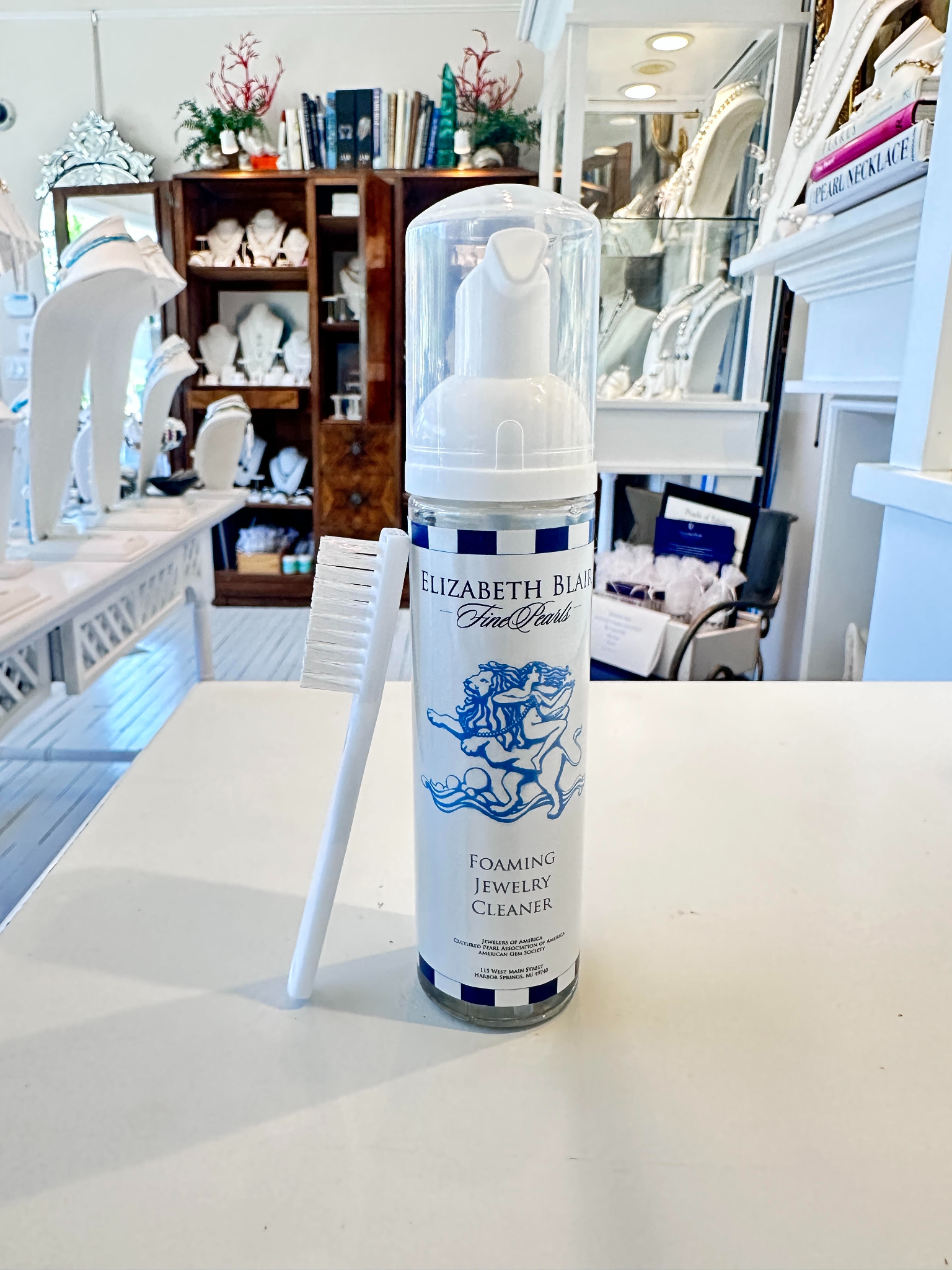
Our Foaming Jewelry Cleaner: The Trusted Choice for Pearls and Fine Jewelry
Not all products for pearl jewelry cleaning are created equal. We chose our foaming jewelry cleaner because it delivers exceptional results on diamonds and colored gemstones while remaining gentle enough for pearls and other delicate materials. Whether you’re cleaning an engagement ring, a gemstone pendant, or pearl earrings, it’s the same formula we trust every day in our store to keep fine jewelry sparkling. Biodegradable, TSA-friendly (under 3 ounces), and safe for most fine jewelry, it’s the ideal companion for keeping your favorite pieces looking their best at home or on the go, and the centerpiece of any pearl maintenance kit worth having.
FAQs
What can I use to clean pearl jewelry?
A soft cloth, lukewarm water, and mild soap, or our biodegradable foaming jewelry cleaner made for delicate materials, can be used. We also sell and ship an affordable foam cleaner that also makes a thoughtful hostess gift or stocking stuffer.
What not to clean pearls with?
Avoid ultrasonic cleaners, steam, chlorine, ammonia-based products, and harsh chemical jewelry dips; all can damage the nacre.
How to clean a dirty pearl necklace?
Wipe each pearl gently with a damp, soft cloth after wear, and have the strand professionally restrung annually if worn often.
How do you make pearls shine again?
Regular gentle wiping restores shine; for deeper cleaning, our foaming cleaner lifts residue without stripping luster. Rinse quickly after application
How can I safely store pearls?
Store pearls flat in a soft breathable pouch, separate from other jewelry, away from direct heat or dry air. Avoid storing in a safety deposit box or in a leather or suede pouch where the tannic acid can be harmful to the luster.
